Our History
A Legacy of Resilience, Innovation, and Nation-Building
By 1947, India had finally won its independence, and the young nation was looking to the future. It was a time of immense challenge and unprecedented opportunity, and if there was one family who saw the true industrial potential of the times, it was the visionary founders of Shibu Metal Works.
Lala Jai Bhagwan Ji, Lala Darshan Lal Ji, and Lala Kishan Chand Ji were inspired pioneers. When a newly free India faced severe foreign exchange restrictions, denying the nation access to heavy manufacturing equipment, they refused to be stopped. Our engineers designed and built our own massive hydraulic presses and custom dies entirely in-house, establishing a reputation for defiance, indigenous engineering, and national duty. That vision led to the birth of an uncompromising organisation that helped build the nation.
Since then, the Shibu Group’s reach has expanded across the globe, partnering with commercial customers, governments, and NGOs around the world. Today, products made by Shibu can be found in the most critical of applications, from the mess tins feeding Indian soldiers on the frontlines, to the relief kits in UNHCR refugee camps, to the heavy-duty cookware powering the world’s finest commercial kitchens.
We focus on metallurgy, process technology, and highly engineered innovative solutions in all our chosen end markets. Today, recognized as a prestigious Star Export House, Shibu continues to offer premier, precision-crafted metal products for major suppliers and distributors globally, dominating the commercial hospitality, defense, humanitarian, and medical sectors.
Backed by an elite engineering division across 175,000 sq. ft. of production facilities, we remain fiercely dedicated to continuing our family’s legacy of top-tier indigenous manufacturing, both now and into the future. Our promise today is the exact same standard that was set in 1942: “If it’s possible in metal, Shibu can do it.”
The rest, as they say,
is history.
(Check out the highlights below in our timeline)
“We don’t just pass down factories, we pass down a defiance to the impossible. For over 80 years, our family’s greatest alloy has been resilience, unyielding engineering, and a profound duty to the nation. We never set out to just build a profitable enterprise, we set out to build a self-reliant India. True industry is not built on guarded secrets, but on shared strength, and when you build for the motherland, legacy takes care of itself.”
– The Shibu Family Ideology
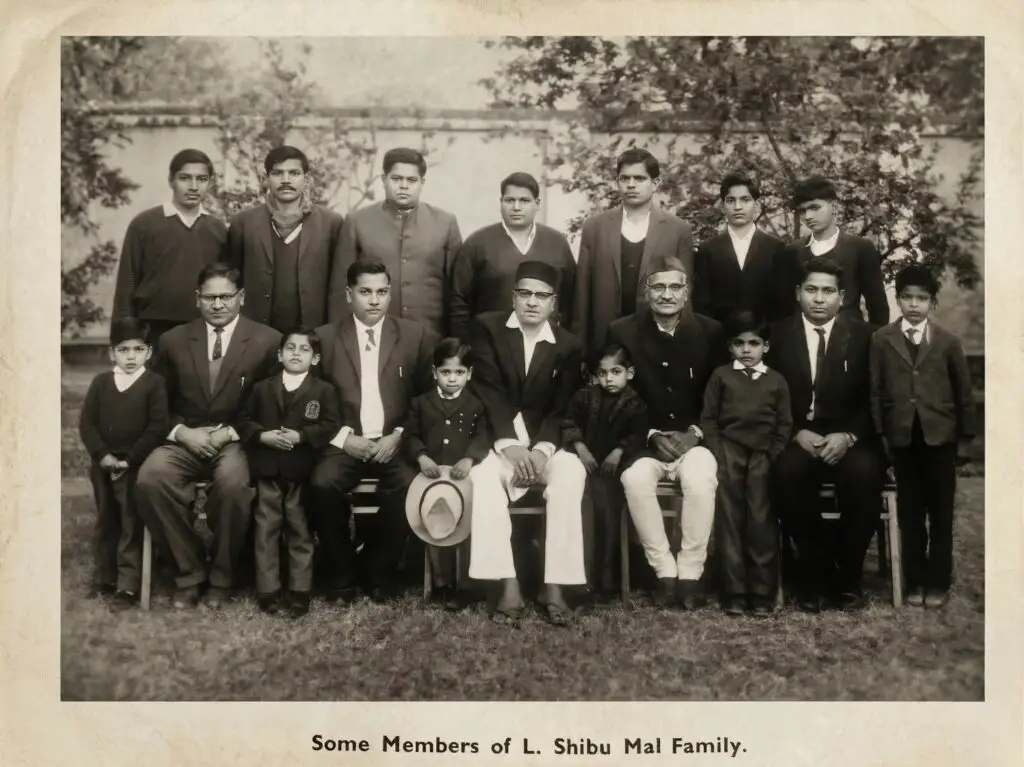
In the Photo:
Standing (L-R): Mr Satya Prakash Garg, Mr Lajpat Rai, Lala Ratan Lal Ji, Lala Kanta Prasad Ji, Shri Ghanshyam Garg Ji, Mr Ashok Garg, Mr Jai Prakash Garg
Seated (L-R): Mr Bittu Garg, Shree Shanti Swarup Ji, Mr Ajay Garg, Lala Darshan Lal Ji, Mr Sharad Garg, Lala Kishan Chand Ji, Mr Rajat Garg, Lala Jai Bhagwan Ji, Mr Pankaj Garg, Mr Laxmi Narayan Ji, Mr Parveen Garg
Era 1: Made in Adversity & Zero-Waste Origins (1890 – 1942)
1890: Late Shri Lala Makhan Lal Ji plants the seeds of a multi-generational empire, establishing our first specialized shop trading in brass, copper, and bronze.
1929 & 1941: The family navigates profound tragedy, losing Lala Shugan Chand Ji and Lala Shibu Mal Ji. These profound losses forge an unbreakable corporate and familial resilience that still defines our DNA today.
1942: Before India even wins its independence, the machine-driven Shibu Metal Works is officially established under the visionary leadership of Lala Jai Bhagwan Ji, Lala Darshan Lal Ji, and Lala Kishan Chand Ji.
1942: Decades before “sustainability” became a global corporate buzzword, our founders instituted a strict zero-waste philosophy, processing 100% of our own melting dross to ensure maximum material efficiency, an uncompromising practice we still rigorously enforce today.
Era 2: Indigenous Defiance & National Duty (1947 – 1963)
1947: As India gains independence, the government strictly restricts foreign exchange, denying us the funds to import heavy manufacturing machinery. Refusing to let adversity dictate our future, our engineers design and build a massive hydraulic press and custom dies entirely in-house.
1947: Using our indigenous press, we successfully deep-draw India’s first 26-inch (size 52) jointless vessel, proving to the world that Indian engineering could rival any global standard while saving the state critical forex.
1948: Cementing our duty to our people, we establish the Shri Shibu Mal Dharmarth Aushadhalaya (dispensary) to provide free healthcare to our factory workers and local citizens.
1950s: We pioneer our first international exports, actively bringing critical foreign exchange into the newly independent Indian economy to help fuel national growth.
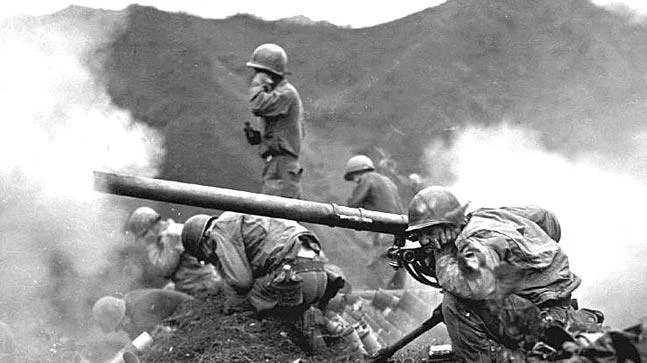
1962: During the Sino-Indian War, we dedicate our factory floor to the motherland. We manufacture lightweight aluminum helmets to replace the army’s heavy iron ones, alongside aluminum vessels to replace their heavy brass & copper cookware. By making the Indian soldier 300% lighter, we directly increase the agility and endurance of the Indian armed forces on the battlefield.
Era 3: The Aluminum Revolution & Economic Patriotism (1964 – 1967)
1964: A dedicated Research Institute and Metallurgical Laboratory is established under a specialized metallurgical engineer to enforce absolute, world-class precision.
1964: Recognizing India’s abundant resources, we mass-produce domestic aluminum utensils, sparking a nationwide shift away from imported copper and brass.
1964: This single innovation liberates the national treasury, saving the Indian government ₹30,000 daily. In today’s value, that equates to saving the nation ₹2.5 Million daily, or a staggering ₹912 Million annually in preserved foreign exchange.
Mid-1960s: We become the first manufacturer in the nation to switch to blister copper instead of electrolytic ingot, saving the government 13% foreign exchange translating to crores of rupees in that era. This bold engineering move directly inspires the Indian Government to rewrite and adopt its national blister copper import policies.
The Silver Jubilee - 1967
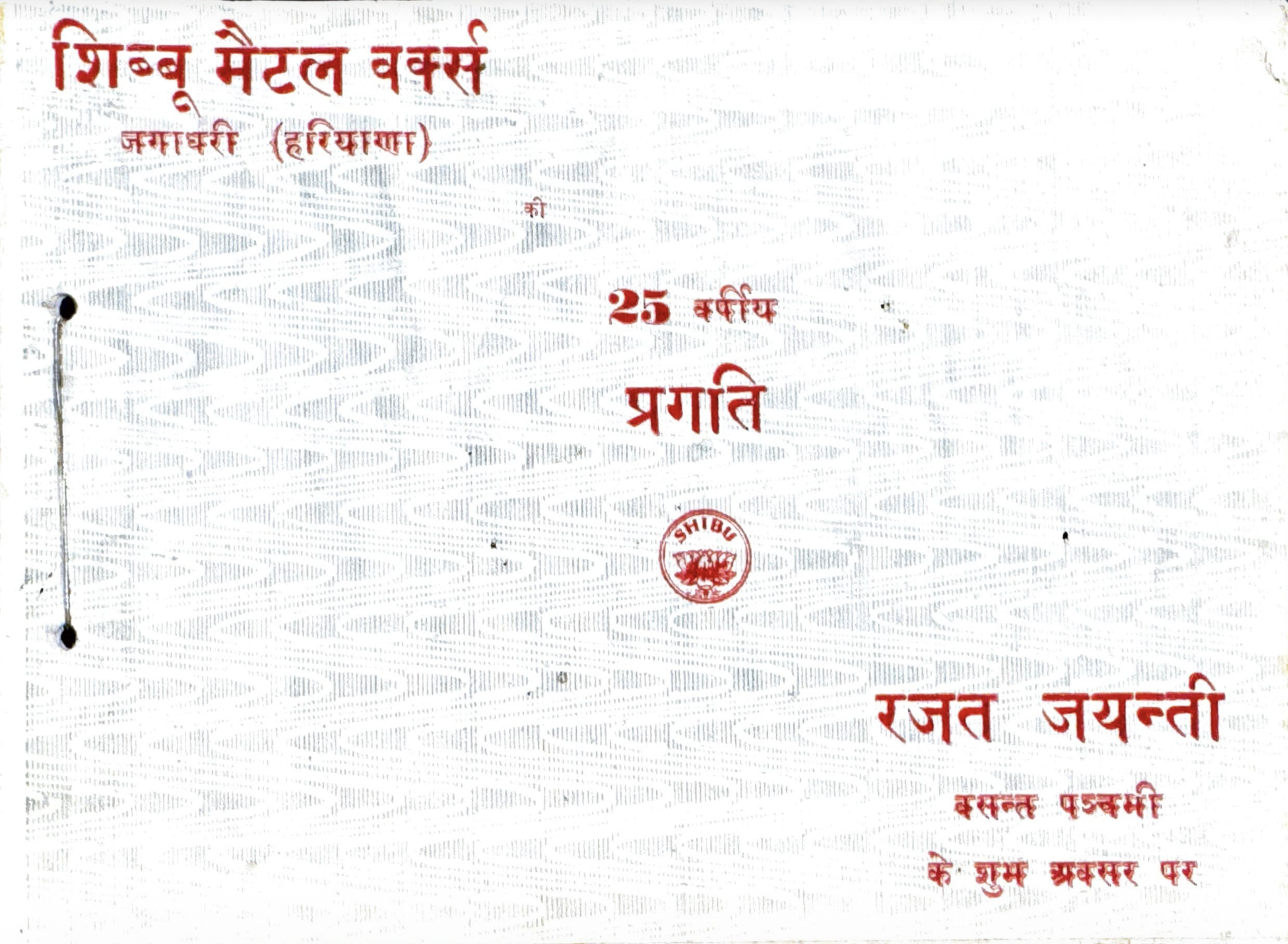
1967: Celebrating 25 years of dominance, we hit a monumental ₹4.6 Million turnover. (With metal scrap at ₹3/kg then vs. ₹280/kg today, this is the modern equivalent of a ₹400 million enterprise).
1967: We proudly launch the iconic Kamal Pressure Cooker, bringing affordable, modern, and safe cooking technology to the everyday Indian home.
1967: Believing that true independence requires industrial self-reliance, we open our factory doors, offering our proprietary machinery, technical know-how, and scientific lab data completely free of charge to help build budding Indian enterprises.
Era 4: Global Innovation & The "Chhilai" Standard (1970s – 1990s)
1971: Our leadership directly advises the Indian Finance Minister, successfully lobbying to lower taxes on thick aluminum sheets to promote domestic aluminium manufacturing over foreign imported copper & brass reliance.
1973: We legally register the Makhan Lal Shibu Mal Dharmarth Trust, formalizing our commitment to fund dharamshalas, hospitals, and educational scholarships.
1990s: We expand our heavy engineering prowess into the appliance sector, manufacturing components like washing machine drums.
Late 20th Century: Shri Kanta Prasad Ji revolutionizes global cookware by inventing “Chhilai” (High-Speed Metal Skimming). By spinning vessels at extreme RPMs to precision-shave the microscopic top layer, this technique reveals a flawless, mirror-like finish. True to our nation-building ethos, we never patent “Chhilai,” allowing our indigenous invention to be adopted as the undisputed gold standard by utensil manufacturers across the globe.
1994: Shri Kanta Prasad Ji takes the helm alongside his son, Mr. Shitanshu Garg, sparking a new era of aggressive technological modernization.
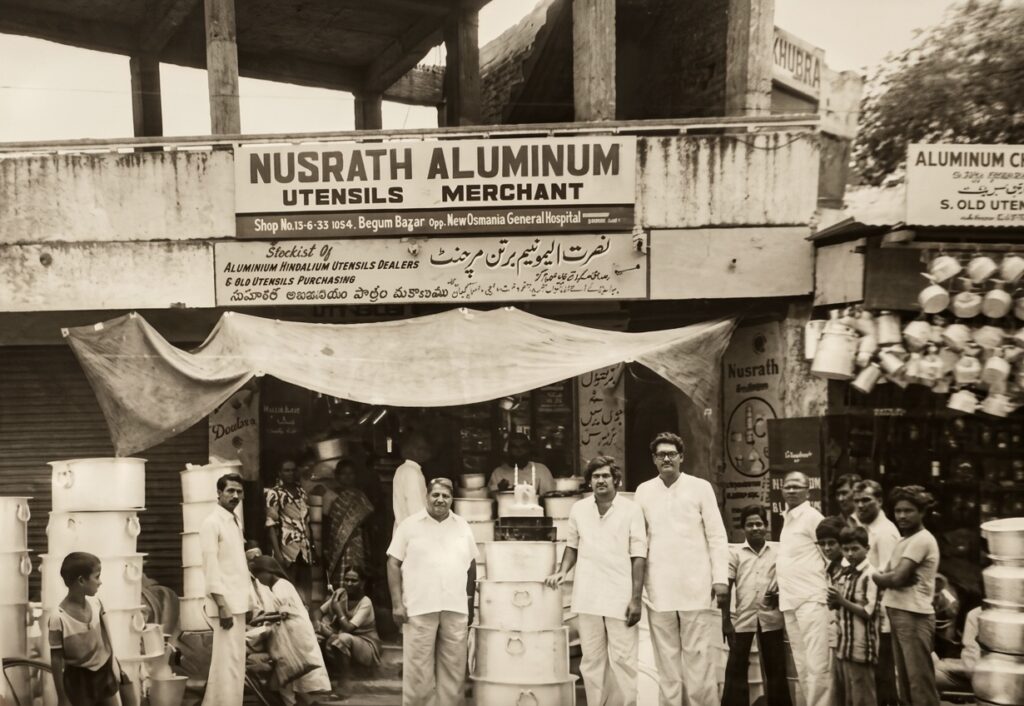
Era 5: Making The Impossible & Global Impact (1995 – 2008)
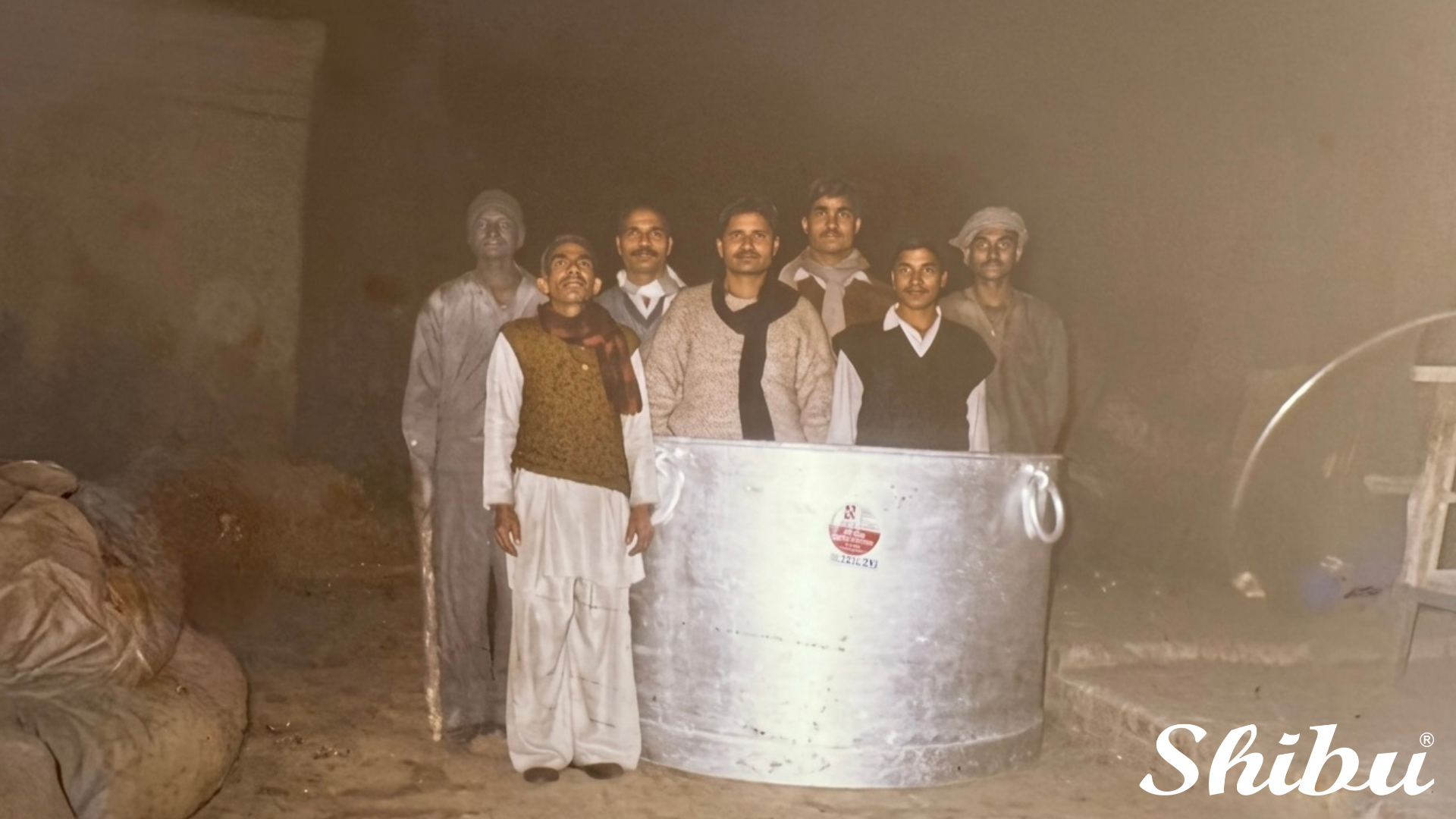
1995: Shri Kanta Prasad Ji engineers the impossible: a massive 50.5-inch, 850-liter cooking pot (Size 100) made completely jointless.
The 2000s: We engineer custom dies to seamlessly press complex vessels previously thought impossible to make without welding, including the deep Kolgam and the completely jointless Biryani Handi (Degra).
2001: We drastically scale our massive aluminum and heavy casting capabilities by establishing Shibu Aluminium Industries.
2005: Cementing our status as a highly trusted global exporter, we become the first in our industry to utilize the Indian Government’s Advance License scheme. Because of our unshakeable reliability, the government grants us rare permissions to stuff shipping containers directly at our private premises, bypassing Inland Container Depots (ICDs) entirely to accelerate our global supply chain.
2006: Partnering with the UNHCR and the Red Cross, we utilize our massive scale to supply heavy-duty relief utensil kits to refugees in the world’s most disturbed and vulnerable regions.
2008: Shibu Metcast is established as purely melting & rolling facility to expand our circle producing capabilities giving us the capability to make sheets and circles of virtually any size.
Era 6: Diversification & Present Day (2010 – Present)
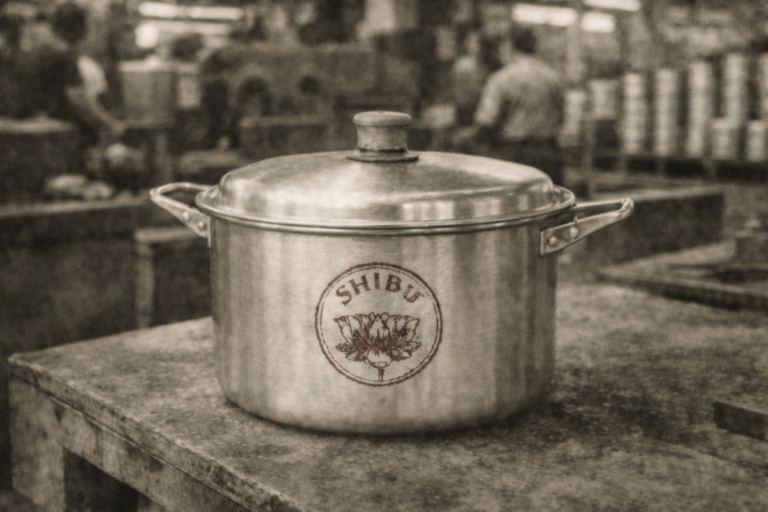
2010: Continuing our 1962 legacy, we begin manufacturing and supplying high-grade mess tins to the Indian Armed Forces to ensure our jawans remain healthy, nourished, and combat-ready.
2014: We launch Gratis Energies to manufacture high-grade solar panel mounting equipment, powering the green energy revolution.
2017: Applying our ruthless engineering philosophy to the building materials sector, we establish Infiniti Woodkrafts as an independent innovation powerhouse manufacturing plywood and other engineered wood products.
2023: We launch a dedicated line of premium, heavy-duty commercial stainless steel cookware designed specifically for the rigorous demands of the global hospitality industry.
2024: Partnering with the Midday Meal Scheme, we manufacture and supply over 100 Metric Tonnes of hygienic stainless steel utensils to safely nourish India’s future leaders in school kitchens across the country.
2025: We expand into precision aluminum hollowware, manufacturing highly durable equipment for hospitals and relief workers.
2025: Mr. Sresht Garg officially joins the leadership team alongside Mr. Shitanshu Garg to drive the legacy into a new century.
2026: Anticipating the future of culinary tech, we begin manufacturing high-precision componentry for advanced automated cooking machinery.
Today: Operating as a prestigious Star Export House, we command 175,000 sq. ft. across our mega-facilities armed with optical lasers and 1,000-ton hydraulic presses. Backed by an elite engineering division, we still design and manufacture 100% of our production dies and custom machinery in-house, upholding the exact standard set in 1942: “If it’s possible in metal, Shibu can do it.”

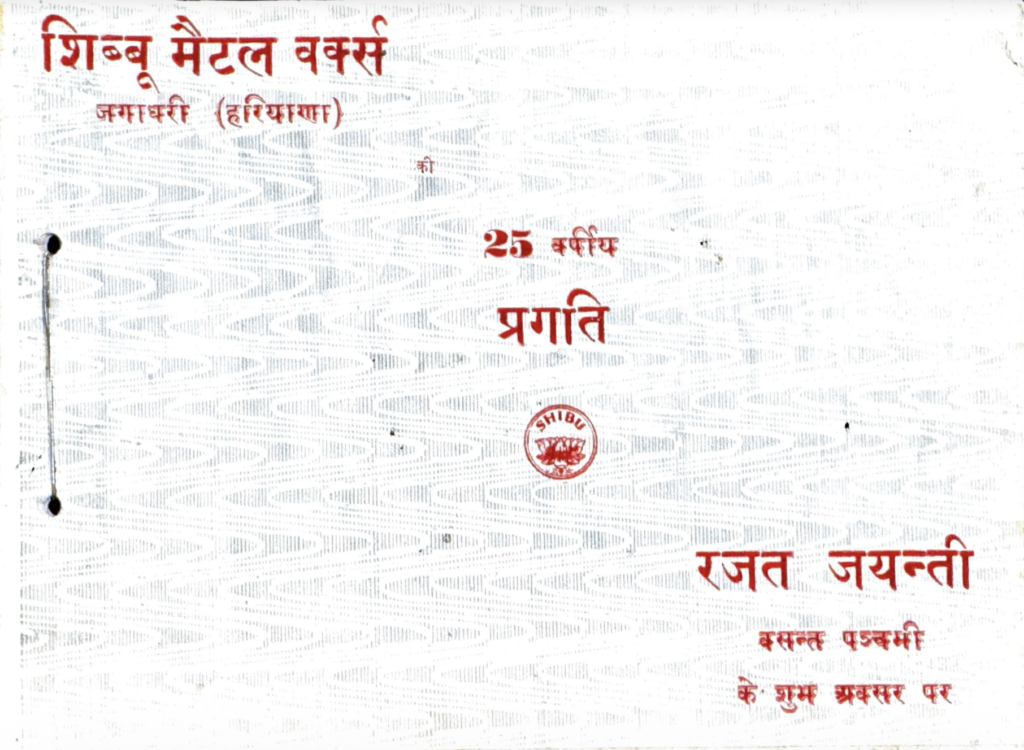
From The Shibu Archives: The 1967 Silver Jubilee Report
Long before the digital age, our legacy was recorded in ink and steel. Read the original 1967 Progress Report detailing our indigenous hydraulic presses, the birth of the Kamal Pressure Cooker, and our blueprint for a self-reliant India.